Sola
A Princess of MarsSola is a young Green Martian in the retinue of Tars Tarkas whose acts of care and allegiance defy the loveless customs of her people. First introduced as the guide assigned to John Carter, she becomes his caretaker, a trusted confidante, and a crucial companion in the escape with Dejah Thoris. Her personal history makes the conflict between Thark custom and individual affection concrete: she is the daughter of Tars Tarkas, and her mother died rather than expose his identity.
Identity and Place in Thark Society
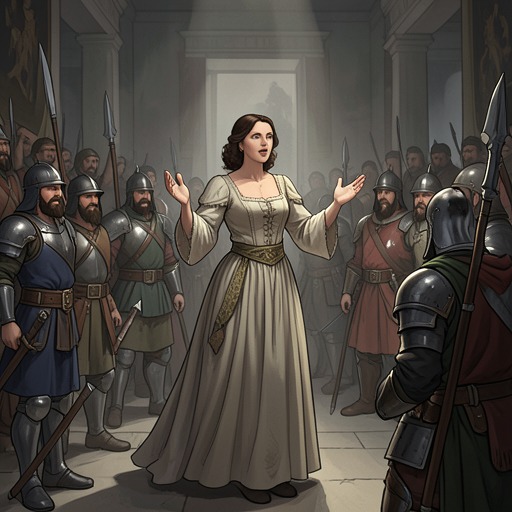
Sola is about eight feet tall and has only recently reached maturity when she is introduced. She belongs to Tars Tarkas’s retinue, and he sends her to escort Carter from the plaza to a chamber where he can rest. Her position places her within the communal life of the Tharks, but her conduct soon distinguishes her from the surrounding society. Carter observes that she alone among the Green Martians he encounters shows sympathy, kindness, and affection, and that her attention to his needs is consistent rather than incidental.
That difference is not simply a matter of temperament. Sola later describes herself as unlike her own people and says that, because she has known love, she feels isolated among them. Her account connects that alienation to the history of her parents and to the social customs that govern reproduction, child-rearing, and family ties among the Tharks. The very affections that make her an exception are also what make her feel that she has no secure place in her community.
Care for Carter and Practical Alliance
When Carter is left in a chamber under guard, Sola brings him food and drink. After he sleeps and wakes cold, she quietly pulls a fur over him and adds another covering. Carter understands these small attentions as evidence of a compassion uncommon among the Green Martians, and later credits her solicitous care with sparing him much suffering and hardship. She is not merely assigned to his custody: she responds to his vulnerability with a personal concern that the surrounding social order does not encourage.
Sola also helps Carter make sense of the society in which he is captive. After he sees a female prisoner treated harshly, he becomes eager to learn the language, suspecting that the prisoner and her guards can communicate. Sola assists his efforts, and within a few days he can carry on a passable conversation and understand most of what he hears. Language gives Carter a way to move beyond observation and toward informed action; Sola’s help makes that change possible.
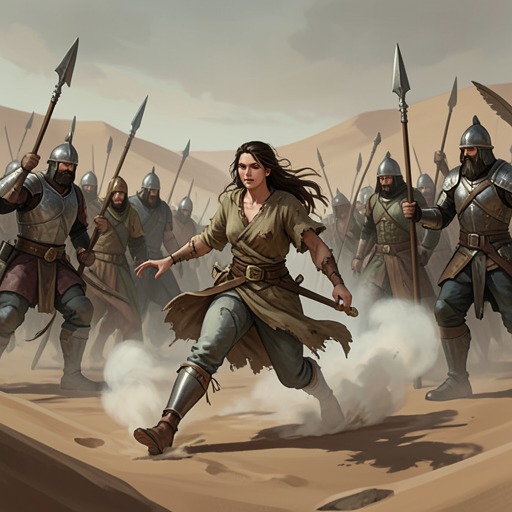
Her care is accompanied by trust. When Carter and Dejah Thoris face the prospect of escape, he asks Sola to come with them, arguing that she hates the customs of her people and could find protection among the Red Martians of Helium. Dejah Thoris likewise offers her a home and the affection denied to her under Thark custom. Sola does not mistake the danger for an easy opportunity: she points out that the southern waterway lies fifty miles away, that Helium is another five hundred miles beyond it, and that the Tharks would pursue them. Once Carter proposes a less obvious northern route, she agrees to leave that night. She rides one thoat while Carter and Dejah Thoris share the other, carrying supplies for two days. Her decision turns sympathy into action, despite the risk to her among her own people.
Family History and the Secret of Tars Tarkas
Sola’s disclosure of her parentage reveals the personal cost behind her estrangement. Her mother was considered too small for the responsibilities of maternity under a system in which chieftains selected primarily for size. She was also less cold and cruel than most Green Martian women and often wandered alone through Thark or among the nearby wildflowers. Sola’s parents’ story, as she presents it, has no parallel within the memory of the oldest living Tharks and stands against the communal norms that denied such a family life.
After an expedition, Sola’s father was absent for four years. Her mother secretly raised her in an old tower, visiting at night and giving her the affection that communal upbringing would have taken from them. She taught Sola their language and customs, but also taught her to conceal her education, her attachment to her mother, and her knowledge of her parentage. Before Sola was placed among the other children, her mother whispered her father’s name to her.
Sarkoja discovered the secret after overhearing their conversation. She demanded the father’s identity, but Sola’s mother refused to reveal it. To protect her daughter from punishment, she claimed that she alone knew the name and would not tell even Sola. Sarkoja went to report the discovery to Tal Hajus. Before she could return with the consequences, Sola’s mother placed her daughter among the other children and left, hoping to see the man she loved once more before her own death. Sola never saw her again. Tal Hajus imprisoned her mother and tortured her for the name; she died without disclosing it.
Sola later learned that her mother had told the Tharks she had killed her child to save her from a similar fate, and had thrown the body to the White apes. Sarkoja alone did not believe the story. Sola suspects that Sarkoja has guessed her origin and her father’s identity, but is afraid to expose what she knows. This hidden knowledge makes Sola’s presence within the retinue precarious: she lives among people whose customs destroyed her family while carrying a secret that could endanger both herself and the man who fathered her.
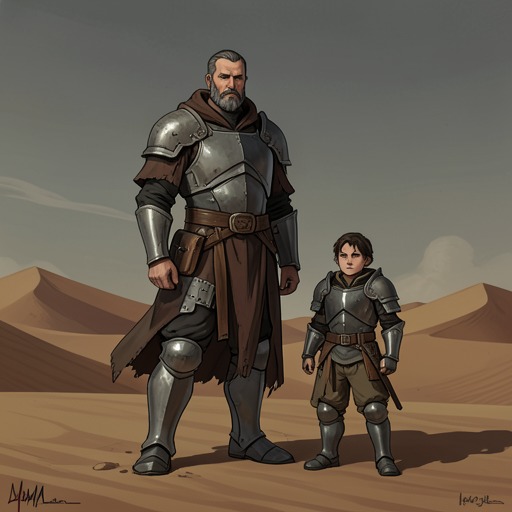
Sola identifies Tars Tarkas as her father only after establishing that she trusts Carter. She gives him permission to speak the truth if circumstances make disclosure useful to her, to Tars Tarkas, to Dejah Thoris, or to Carter himself. Tars Tarkas does not know that Sola is his daughter, nor that Sarkoja’s betrayal helped bring about her mother’s death. When he learned of the mother’s fate, Sola says, he showed no visible emotion as Tal Hajus recounted it, but did not laugh at her suffering. She believes that he has remained inwardly devoted to her mother and waits for an opportunity to avenge her. The revelation thus recasts Tars Tarkas’s history as well as Sola’s: the formidable warrior has a daughter living beside him, though the secret of her birth remains concealed from him.
Loyalty, Escape, and Later Recognition
Sola’s alliance with Carter and Dejah Thoris is grounded in both sympathy and clear judgment. She recognizes that the escape route to Helium is dangerous, and her knowledge of the Tharks’ likely pursuit prevents the plan from being treated as a simple flight. Still, she chooses to help. Her agreement and practical participation make her more than a witness to Carter’s rescue of Dejah Thoris; she is one of the escape party and accepts the consequences that could follow from assisting them.
The fugitives become lost after traveling through the waste. When Carter awakens after a night’s rest, Woola has found him and come to share the group’s fate. Carter and Dejah Thoris continue with Sola, but when one thoat collapses they leave it behind and proceed with the remaining mount, with Sola and Carter walking so Dejah Thoris can ride. The party later sees mounted warriors in the distance. These circumstances place Sola’s choice in the context of a difficult and uncertain journey, rather than a safe departure from Thark.
After the fall of Zodanga and the new friendship between the Tharks and Helium, Sola’s concealed identity is publicly acknowledged. Tars Tarkas recognizes her before his chieftains as his daughter. She accompanies him on the return journey toward Thark, and three weeks later she returns with him and Mors Kajak for the ceremony joining Dejah Thoris and John Carter. The acknowledgment reverses the secrecy that shaped her early life: the daughter hidden in a tower and then placed among communal children is at last named openly by her father before the Thark leaders.
Narrative Significance
Sola’s story gives a human and familial dimension to the novel’s account of Thark society. Carter observes the cruelty of the Green Martians from outside, but Sola can show its consequences from within: the separation of parent and child, the suppression of affection, and the punishment of a mother who refuses to surrender the identity of the person she loves. Her secret is not merely a surprise about lineage; it reveals how customary power reaches into intimate life and how loyalty can persist in the spaces that custom attempts to close.
Her practical kindness also offers a contrast to a culture in which care is scarce. She tends Carter, helps him learn the Thark language, and risks her own position to aid him and Dejah Thoris. Yet the narrative does not make her compassion abstract: it is expressed through specific acts of protection, trust, and shared danger. Sola’s later public recognition as Tars Tarkas’s daughter gives that private history a visible consequence, joining the possibility of family affection to a broader reconciliation between the Tharks and Helium.